








Invoer 7771
Context
Headquartered in Uzwil, Switzerland, Bühler is renowned worldwide for manufacturing machinery for the food processing industry. Together with Vyncke, another world leader which manufactures industrial energy installations, they are building a test site in Uzwil to convert food waste into green energy as biomass. SCE supplied the silo that serves as the ‘battery’ for the entire project.
| Klant |
Klant
Bühler & Vyncke |
|---|---|
| Industrieën |
Industrieën |


A long lasting partnership
The Bühler and Vyncke partnership has been ongoing for some years now. Their goal is to support food production companies in the sector that are struggling with transitioning mechanical and thermal processes to green energy. Construction of a pilot plant at Bühler, to explore the potential of biomass combustion, commenced in 2023.
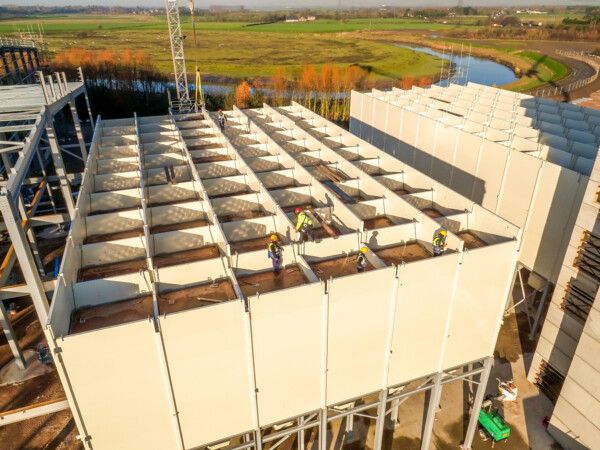
‘Energy consumption is much higher in winter in a country like Switzerland. Currently, it is difficult to store the green energy generated during the summer months, when production is higher and power consumption lower, so that it can be used during winter,’ said Johannes Wick, CEO of Bühler. ‘Turning biomass into energy may be a feasible alternative.’ Biomass is then used as a battery. To achieve this, Bühler opted for SCE’s patented butterfly hopper silo with smooth walls. ‘The silo stores biomass flows from the various application and training centers on the Bühler site. The SCE silo acts like a battery that Vyncke can draw energy from for those same buildings,’ said Andy Vanparys, CEO of SCE.

Specific residual flows
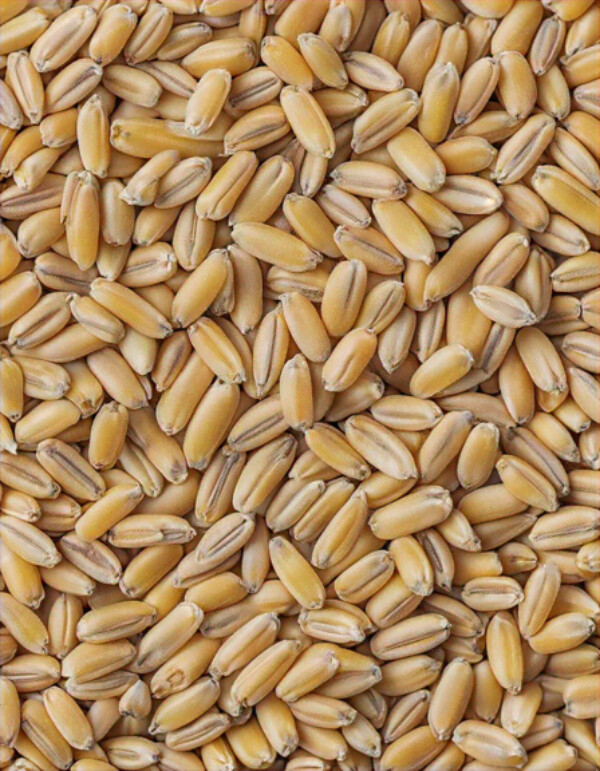
Sidestreams and byproducts from the food processing industry have specific characteristics. Bühler and Vyncke have, therefore, combined their areas of expertise in this pilot project that focuses both on energy-efficient process solutions and energy-efficient production fueled by biomass. ‘The energy recovery center is used to heat the site during the winter months and is open for R&D and training to staff, students and customers during the summer months. They may bring their own raw materials, which we convert into the desired end product,’ said Stefaan Lauwers, CEO of Vyncke. ‘This creates very useful knowledge. We process traditional grains, such as wheat, maize and barley. We also work with biomass side streams when protein concentrates and isolates used for meat and milk analogues are produced, or flour made from shea nuts and almond shells.’

Optimal storage
SCE’s silo was built in between the existing cramped structures thanks to our easy installation method. The silo is modular so space could be used efficiently and storage volume maximized. ‘The solution perfectly satisfies the demand for storing mass flows from different sources with differing specifications,’ explained Andy. ‘The silo-battery has proven its efficiency as a building structure and as storage for biomass containing raw materials, end products and by-products. It also demonstrates that SCE is completely ready for a green future.’

Local problems, local solutions
The many SCE modular silo + building options combined with Bühler and Vyncke technologies are a positive evolution for many companies. Johannes Wick uses rice mills as an example. ‘Silica is a residual product with no nutritional value. If we convert those rice husks into energy for production, it is a win-win in combatting the global waste and energy problem. So, our collaboration with Vyncke means we are striving for local solutions to local problems. And the residue from the combustion process is not lost as the ash contains minerals that make it valuable as a fertiliser. Biomass is CO2-neutral because CO2 emissions are immediately absorbed by plants. We want to transition to CO2-negative production by capturing CO2 emissions and using these in greenhouses.’

Big potential in food and agro industry
According to Stefaan, 'with Vyncke, our business model has been around for over 100 years, turning waste from an industrial process into energy that feeds that process. It's a local solution that solves a waste problem and an energy problem, and it avoids transporting waste and building a distribution grid for power or gas. It's finding local solutions for local problems, and that has been the strength throughout the years of Vyncke. Most of the time, these are solutions or projects that do not even need subsidies or other support. It's so logical to do it and the food and agro Industry is a typical industry where there's a big potential for implementing such Solutions.
We are convinced that bringing so many customers and potential solutions together is the way forward. We live in a society where you cannot do anything alone anymore, and you have to work together to bring better solutions to customers. Together, you can better understand the customers' needs and build something that fits together.'
